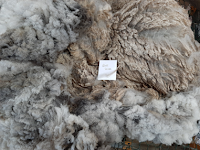
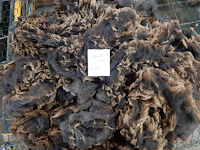
Three purebred Shetland breeding groups were made this fall, with lambs expected in Mar-Apr. All three tested RR (woohoo!) and have great structures and fleece. All are calm rams with good temperaments. 1/3 of the breeding ewes are yearlings this year.
Cygnus - White, very fine, dense, very soft, B/?, RR, 2021 ram
(UTS Tonga/UTS Moonwind)
Cygnus notes: One of the finest and softest handling fleece on adult rams I've had. Every time I touch his fleece, my fingers just don't want to leave. This is about as ideal Shetland fleece as you can get, of course on a great structure. Horns have good clearance. Fleece stats this yr (lamb) AFD 20.2, SD 4.2, CV 21, SF 19.6.
Ewe notes: Tacoosh and Windsong are WSWF Champion ewes and great producers. Rissa (a Windsong daughter), Puffin (half sister to Cerina), Jaeger, and Tern are all yearlings and have dense, very fine/fine fleeces. Markoti and Sekka (Skua's mother) are 6 yr old ewes with silky fine fleeces. Keeping Windsong's daughter from this year.
UTS Obsidian and UTS Cygnus
Forgot to get a group picture when they were in the field so had to get individual shots today of Cygnus' group. Don't worry, coats will be going on soon!
Obsidian - Black, very fine, dense, very soft, B/b, RR, 2022 ram lamb
(UTS Skua/UTS Coolea)
Obsidian notes: Love this ram's horn set and head. Great fleece and structure with lots of potential in this ram growing up. On par with his great sire.
Ewe notes: Tringa, Murre, Sandiloo, and Harlequin are all yearlings with great fleeces and structures. Cerina (WSWF Champion ewe), Kaffe, Moonwind, and Tahiti have produced wonderful lambs, and am keeping both of Cerina's ewe lambs this year.
Obsidian's group - Tringa (grey kat - above Obi), Murre (spotted grey kat - facing Tringa), Sandiloo (grey kat - far upper rt), Moonwind (white), Cerina (Shaela, middle, WSWF Champion Ewe), Tahiti (black), and Kaffe Fassett (Spotted grey kat, front)
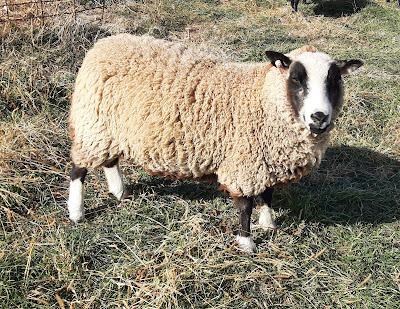
Also in Obsidian's group but is always underfoot so out of the camera - Harlequin (Yuglet sokket grey kat)
Pico - Spotted grey katmoget, very fine, dense, soft, B/?, RR, 2020 ram
(UTS Triton/ UTS Patches)
Pico notes: Love his meaty wide structure, dark kat color, silky, fine, soft fleece. Horns are clearing. Expecting spotted lambs from this group.
Ewe notes: Kitti and Maali are yearlings. The rest are adults that have produced very well, all with great fleeces and structures. Conde and Bali have ewe lambs that are keepers this year.
Pico's group - Kittiwake facing, Fancy, and Maali (whites), Murex (grey kat with dk face and snip), Bali (grey kat next to Pico), Cachet (fawn kat behind Murex), Vivian (Bleset grey kat), Conde (grey), and Maja (spotted fawn kat)